Antique silver is not just a metal but a piece of history that has passed through several generations. From Victorian flasks to silver cutlery and tableware, every piece has its own story. This guide will help you identify genuine silver, read its marks and understand what determines value.
Key takeaways
- Hallmarks reveal origin and age.
- Genuine silver does not stick to a magnet.
- Patina often raises rather than lowers value.
- Value depends on maker, condition and rarity.
- An antique piece is often the only one.
How to identify genuine silver
The first sign is hallmarks. Quality silver is marked 925 (sterling) or 800/830 fineness; older pieces may have “sterling” or national symbols. Genuine silver does not stick to a magnet and has a characteristic, long-fading ring when tapped.
Hallmarks and their language
On antique silver you will often see several small stamps — hallmarks. They may indicate:
Hallmarks are like a piece’s passport. Learn to read them and you unlock a whole history.
What determines value
The value of antique silver depends on several factors: age (older is often more valuable), maker (known workshops raise value), condition, rarity and design. Weight matters too, but collectible and artistic value often far exceeds the metal price.
Patina: clean it or not?
Patina is the natural darker layer that forms over the years. Collectors often value it because it testifies to authenticity and age. Aggressive polishing can wear away fine details and reduce value. So clean antique silver minimally and carefully.
Where to start a collection
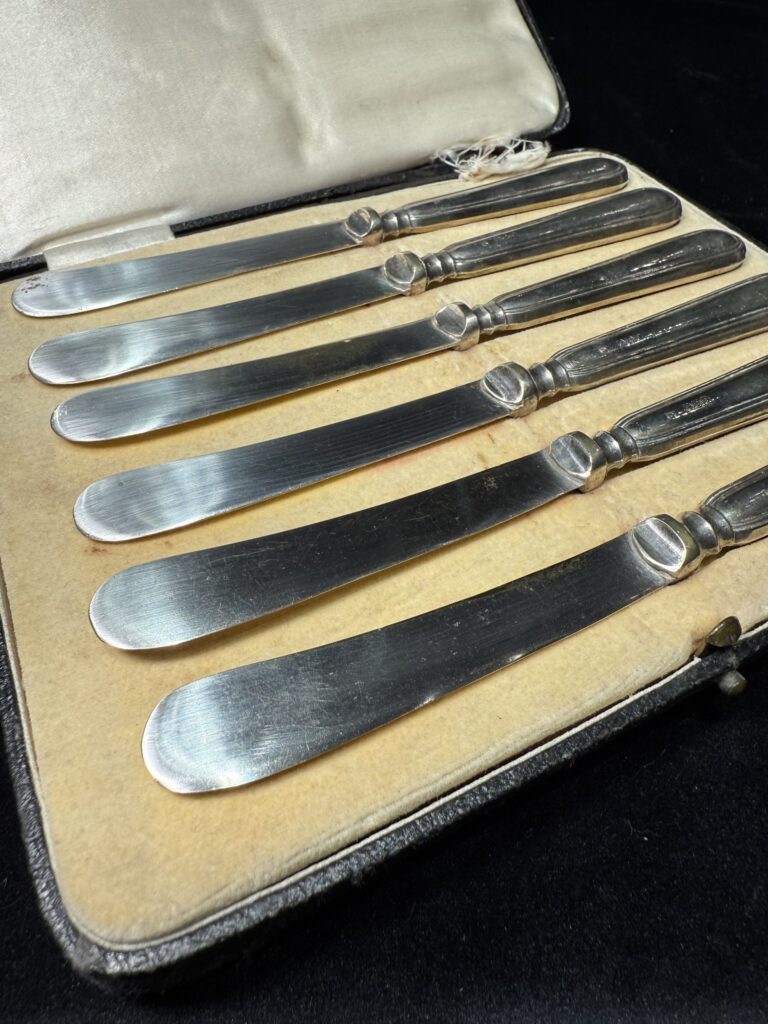
For beginners we recommend pieces with clear hallmarks and good condition — they are easier to identify and hold their value. Among the most popular: silver cutlery, tableware, flasks, salt cellars and unique decorative pieces. Each find is often the only one, so if you like it — do not wait.
Looking for rare antique pieces? Browse the antiques collection.
Frequently asked questions
How do I identify genuine silver?
Look for hallmarks (e.g. 925, "sterling", maker's marks). Genuine silver does not stick to a magnet and has a characteristic ring. When in doubt, consult a specialist.
What do the letters on antique silver mean?
They are maker's or workshop marks (hallmarks) and date letters. From them you can determine the country of origin, period and maker.
Should antique silver patina be cleaned off?
Not always. Patina is often part of a piece's value and beauty. Aggressive cleaning can reduce collectible value.
What determines the value of antique silver?
Age, maker, condition, rarity, design and weight. Unique, well-preserved pieces with clear hallmarks are valued most.