More and more couples are choosing moissanite over a diamond — and for good reasons. But is moissanite inferior? No — just different. In this article we honestly compare both stones by sparkle, hardness, price and appearance so you can decide with a clear conscience.
Key takeaways
- Moissanite is a real stone, not an imitation.
- It sparkles even brighter than a diamond.
- Hardness 9.25 — perfect for everyday wear.
- The price is several times lower.
- A diamond is tradition and prestige.
A quick comparison
| Property | Diamond | Moissanite |
|---|---|---|
| Hardness (Mohs) | 10 | 9.25 |
| Sparkle | White, “icy” | Brighter, rainbow-like |
| Price | High | Several times lower |
| Origin | Natural / lab-grown | Lab-grown |
| Sustainability | High | High, ethical |
Sparkle and appearance
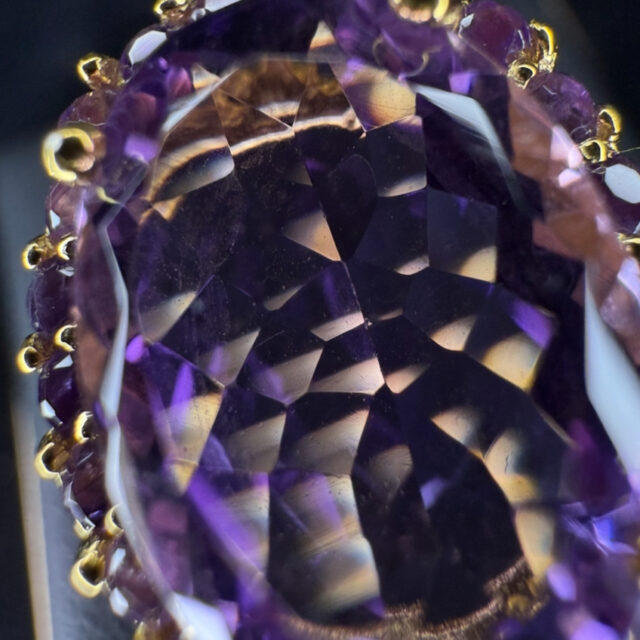
Moissanite refracts light more strongly than a diamond, so it sparkles brighter and more “colourfully” (the so-called rainbow effect). A diamond shines more restrained, white. Which is more beautiful is a matter of taste: some love moissanite’s dramatic play, others the classic diamond ice.
For the price of a diamond you can have a modest stone — or an impressively sized moissanite for the same money. The choice is yours.
Hardness and everyday wear
Diamond is the hardest mineral (10 on the Mohs scale). Moissanite is not far behind (9.25) and is harder than any other popular gemstone — sapphire, ruby or emerald. This means moissanite will easily withstand daily engagement-ring wear for decades.
Price and value
Moissanite’s biggest advantage is price. For the same sum you get a much larger and brighter stone. A diamond, in turn, has an aspect of tradition, prestige and resale value that matters to some buyers.
Ethics and sustainability
Lab-grown moissanite is an ethical and more environmentally friendly choice, with no mining impact. This increasingly drives young couples’ decisions.
So what to choose?
Choose a diamond if tradition, prestige and the classic white sparkle matter to you. Choose moissanite if you want a larger, brighter stone at a sensible price and value ethical origin. Both are excellent choices; what matters most is that the ring brings you joy.
Browse rings with diamonds and moissanite — we will help you compare.
Frequently asked questions
Is moissanite a real stone?
Yes. Moissanite is a real mineral (silicon carbide), extremely rare in nature, so for jewellery it is grown in a laboratory. It is not an imitation or glass.
Can you tell moissanite from a diamond with the naked eye?
Hardly. Moissanite sparkles even brighter and more "rainbow-like". Only a specialist with a tester can tell them apart precisely.
How much cheaper is moissanite?
Usually several times — for the same price you get a much larger moissanite than a diamond.
Is moissanite suitable for everyday wear?
Yes. In hardness (9.25 on the Mohs scale) it is second only to diamond, so it is perfect for an engagement ring.